
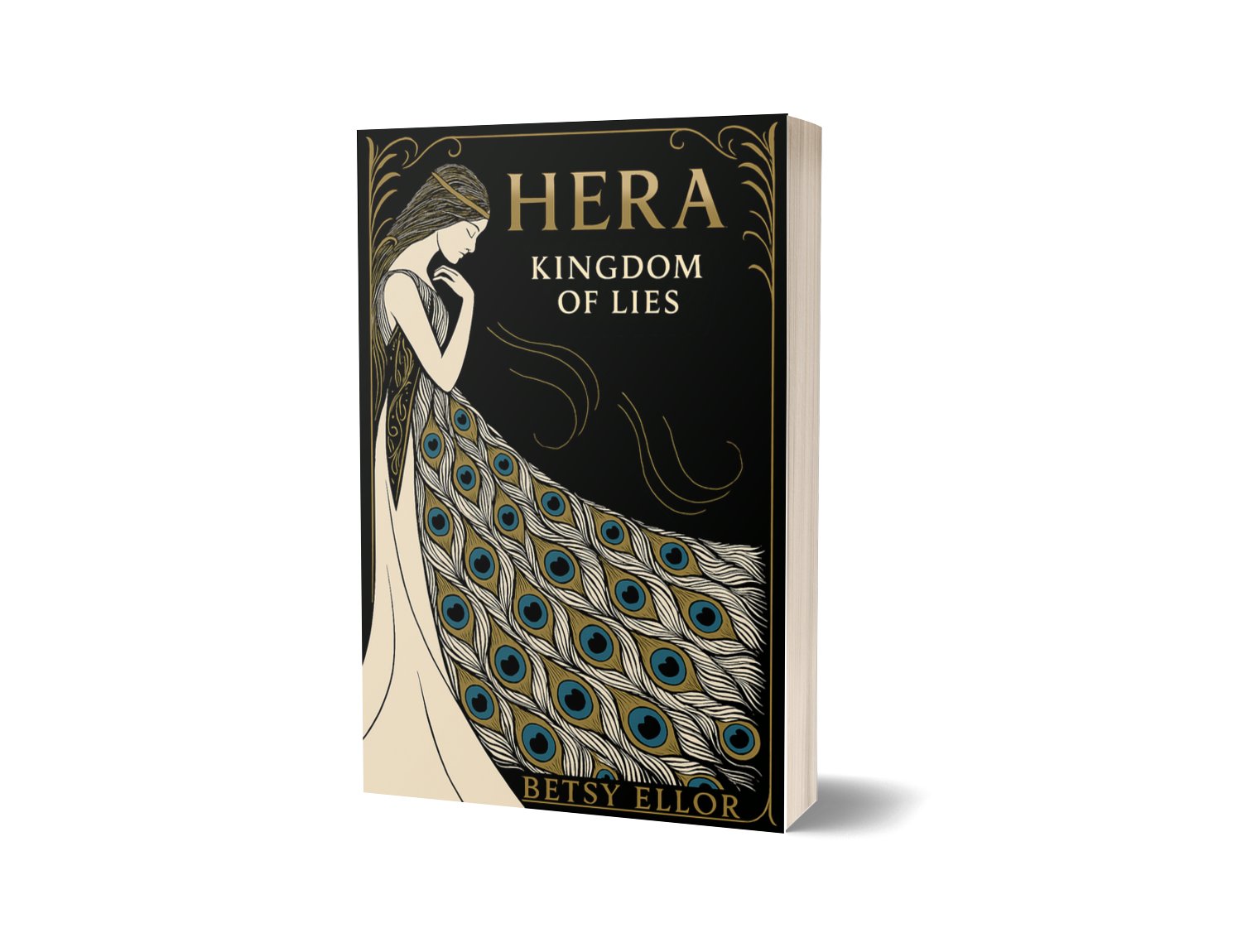
Hera: Kingdom of Lies
“A vivid portrayal of a Greek goddess’s power and resilience . . . Deeply compelling and ultimately empowering.”
Before she was a villain, she was the one who kept the world running while the gods played at war. They tried to take her power, but she built a new order, raised a son, and refused to break.
Rich with betrayal, desire, and divine intrigue, this origin story of Greek mythology told from the point of view of its chief villain weaves gods, nymphs, dragons, sex, lies, and strategy into a fierce new legend. Hera: Kingdom of Lies combines the social and political maneuvers of Scandal with the mythic, villain-redemption of Circe.

Praise for Hera
"Rooted in myth yet pulsing with modern fire, Hera: Kingdom of Lies is a reimagining of a classical tale, one that honors a woman’s rage, her love, and the power she claims for herself. A retelling made for contemporary women."
— Bobbi Lerman, founder and editor, Scribblers Ink
“A captivating reading experience . . . Ellor creates Hera as she should be – not a villain, as so many women are cast, but as a resolute and fiery hero, a phoenix from the flames that protects and claims a better life for herself and those who need it.”
— Hook of a Book
"Jealous, vengeful ....these are the characteristics traditionally assigned to Hera, wife of Zeus. In Hera: Kingdom of Lies, Betsy Ellor turns tradition on its head, revealing a woman who, facing heartache and betrayal, discovers the power she holds within."
- Susanna Baird, editor, Five Minutes
"From the opening scene to the final moments, I was captivated. The author crafted a beautifully detailed world with vivid characters . . . Highly recommend."
- Wonderful World of Words
"Ellor’s novel is deeply compelling and ultimately empowering. By centering Hera’s interior life, the narrative invites readers to empathize with her burdens and root for her survival—not simply in a physical sense, but in her determination to retain moral clarity and purpose. . . The feminist reframing is especially effective. The recurring refrain that she is “only [her] own” provides Hera with the confidence that she can take back her autonomy: “I armored myself with those words…It was time to claim what I’d earned.” . . . the novel succeeds as both myth revision and character study, restoring complexity, dignity, and strength to a goddess too often flattened by tradition.”
- Kirkus Reviews